

DOCSIS 4.0 Deployment: Questions Every Operator Should Ask
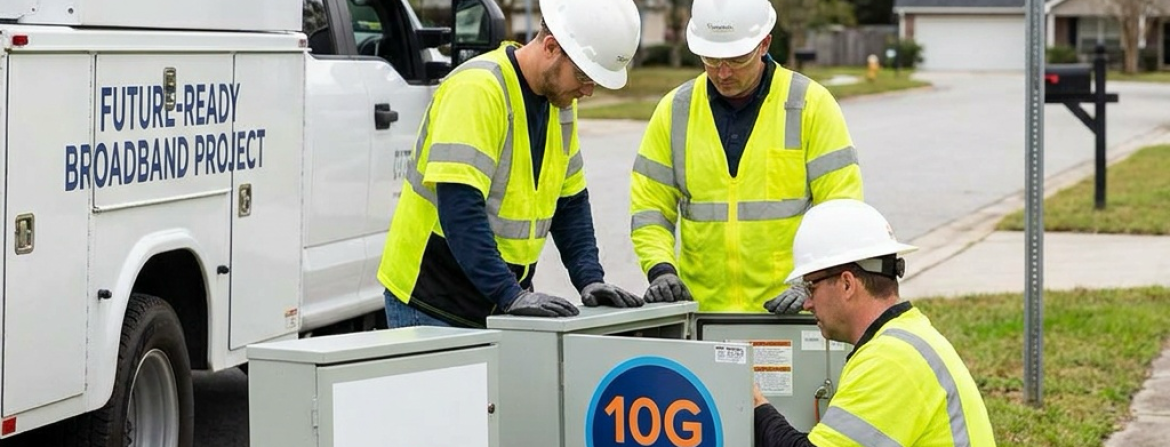
As cable operators prepare for DOCSIS 4.0 deployments, amplifier replacement is often one of the first infrastructure investments under consideration, and for good reason. Most outside plant equipment was designed for a 750 MHz or 1 GHz network, while DOCSIS 4.0 requires support for 1.2 GHz Full Duplex (FDX) or up to 1.8 GHz Extended Spectrum DOCSIS (ESD). Replacing amplifiers alone will not deliver the full benefits of DOCSIS 4.0. Here are key questions operators should ask before starting their upgrade.
Which Parts of the Network Should Be Upgraded First?
Not every service area requires immediate modernization. Many operators are prioritizing amplifier replacements in markets facing aggressive fiber competition or experiencing the highest bandwidth growth. A phased deployment strategy can help balance performance goals with capital efficiency.
Common first-phase targets include:
- Service groups experiencing the highest bandwidth growth
- Markets facing competitive fiber overbuilds
- Regions where node segmentation is already planned
- Areas with aging outside plant infrastructure
Starting with high-impact regions allows operators to generate early performance gains while building operational experience for broader deployments.
Is the Rest of the Plant Ready for Higher Frequencies?
Amplifiers may be the most visible component of the upgrade cycle, but they are only one part of the signal path.Taps, splitters, connectors, hardline coaxial cable, and other passive components must also support the highest downstream frequencies required by DOCSIS 4.0. Likewise, node and cable modem capabilities also play a major role in determining how much additional capacity subscribers ultimately experience.
Transport optics should also be part of the readiness assessment. As operators deploy DOCSIS 4.0 and Distributed Access Architectures (DAA), transport links between the core, aggregation, hubs, and Remote PHY or Remote MACPHY devices often require more than traditional 10G connectivity. AOI’s new QuantumWave™ 25G tunable Small Form-factor Pluggable (SFP) can provide a compact, cost-effective option for mid-haul and backhaul links while supporting greater bandwidth demands and simplifying inventory through tunable wavelength capabilities.
Before deployment begins, operators should assess:
- Passive component frequency ratings
- Hardline infrastructure condition
- D4.0 Node and cable modem deployment strategies
- Transport optics and 25G connectivity requirements
A comprehensive DOCSIS 4.0 readiness assessment should evaluate the entire HFC network, including both active and passive plant components.
Should a Phased Approach to Increased Downstream Bandwidth be Considered?
Many operators need to increase their upstream bandwidths to alleviate upstream capacity constraints and competitive pressures. It may be desirable to initially deploy DOCSIS 4.0 1.8 GHz rated amplifiers with increased upstream bandwidths without increasing the downstream signal spectrum beyond 1 or 1.2 GHz. Typically, this can be done without replacing legacy taps and passives, allowing deferral of significant material and labor costs.
Most DOCSIS 4.0 1.8 GHz amplifiers allow downstream operation in 1 or 1.2 GHz mode for such initial deployments. When downstream bandwidths need to be increased to 1.8 GHz in the future, the taps and passives would need to be upgraded and the amplifiers are easily switched to 1.8 GHz mode.
Can Existing Power Infrastructure Support New Equipment?
Power planning is often overlooked during early upgrade discussions.
DOCSIS 4.0 amplifiers and intelligent network equipment generally consume somewhat more power than legacy devices. In some cases, operators are discovering that existing power supplies and backup systems require upgrades to support next-generation deployments. Questions to evaluate include:
- Available power capacity throughout the plant
- Backup power requirements
- Power supply age and condition
- Future growth considerations
Addressing power requirements early can help avoid costly redesigns and deployment delays later in the project lifecycle.
How Will Remote Management Change Network Operations?
DOCSIS 4.0 upgrades are not just infrastructure projects; they also create opportunities to modernize network operations. Intelligent outside plant equipment can provide real-time visibility into network health, enabling more proactive maintenance and faster service restoration.
Modern amplifiers and nodes increasingly support remote monitoring, software updates, status reporting, and predictive diagnostics. These capabilities can help operators identify issues before customers experience service degradation.
However, realizing those benefits requires more than deploying new hardware.
Operators should evaluate:
- OSS and network management integration
- Analytics and monitoring platforms
- Workforce workflows and dispatch processes
- Predictive maintenance capabilities
The organizations that successfully leverage remote management technologies can reduce truck rolls, improve service reliability, and lower operational costs over time.
Amplifier Upgrades are Just the Beginning
Operators that approach these upgrades as coordinated, multi-year programs, rather than isolated equipment swaps, will be better positioned to maximize performance, improve operational efficiency, and extend the value of their investments.
For DOCSIS 4.0 deployments, the key challenge is no longer determining whether upgrades are necessary. It is ensuring that the network is prepared to support them efficiently and strategically.