
Sahil Yadav is a senior director of product management at Applied Optoelectronics Solutions, Inc. and a recognized expert in AI-driven infrastructure. He has led the development of autonomous systems for Fortune 500 companies as well as government clients. With deep expertise in ML, telemetry, and network resilience, Sahil builds self-healing and compliant AI architectures across cloud, edge, and on-prem environments for predictive maintenance and infrastructure monitoring. A senior IEEE member, he is a frequent conference speaker, blog author, and media contributor.
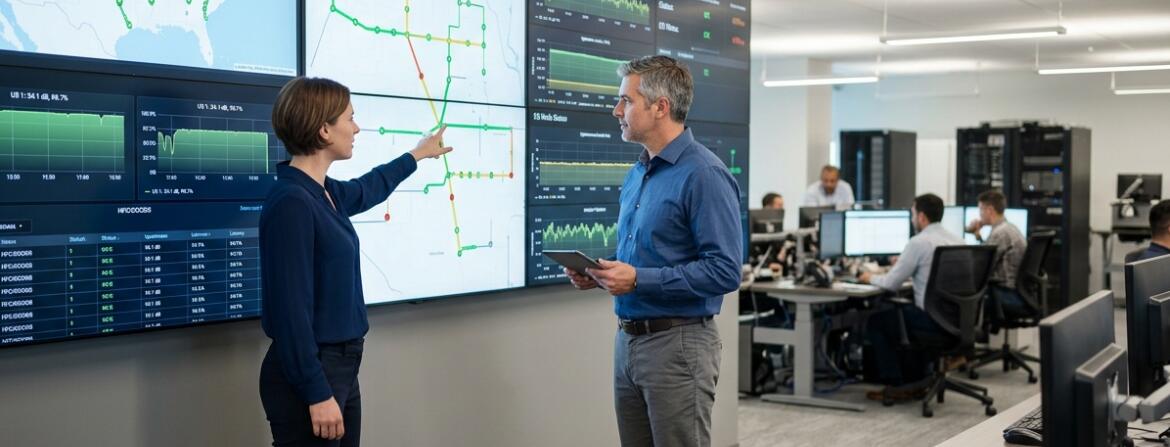
While the cable industry debates DOCSIS 4.0 timelines, DAA architectures, and spectrum expansion strategies, many operators face a more immediate constraint: truck rolls. The speed of an HFC upgrade is increasingly determined by how efficiently field crews can execute amplifier upgrades, balance cascades, and minimize repeat site visits.
This is the part of the cable upgrade story that rarely makes it onto the roadmap slides. It is also the part that is increasingly determining who hits a multi-gigabit commitment now and who quietly slips into it later.
The Operational Challenge of Mid-Split and High-Split Activation
While truck rolls have always been a factor in HFC operations, they take on new significance during DOCSIS 4.0 upgrades. Much of the work required to unlock additional upstream capacity remains fundamentally physical.
Whether an operator is pursuing an 85 MHz mid-split or a 204 MHz high-split architecture, success depends on crews moving through the plant, upgrading equipment, and validating performance across the cascade. Inside that work, there is no shortcut around the cascade itself. For example, every amp module that needs to support the new band plan has to be touched, and every passive that limits headroom has to be evaluated. This is followed by the span having to be balanced after the swap. As a result, the pace of deployment is often determined less by technology availability and more by the efficiency of field execution.
How Remote Amplifier Management Reduces Truck Rolls
Remote amplifier management functions as a force multiplier for field operations. By allowing operators to monitor amplifier health, localize faults, and validate network readiness remotely, it reduces unnecessary dispatches and shortens upgrade cycles.
Distributed Access Architecture (DAA) and remote amplifier management matter because they reduce the number of return visits. Every fault localized from the NOC instead of from a truck, every avoided rollback, and each node qualified remotely before dispatch is real, accretive labor budget.
Operators investing in DAA visibility, AI-assisted fault detection, and modern node telemetry are not necessarily upgrading more nodes on paper. They are, however, finishing the upgrades they started without the long tail of return trips that used to follow.
Measuring the True Cost of DOCSIS 4.0 Deployment
When budgeting for DOCSIS 4.0, the right unit of analysis is not the per home cost of equipment. It is the all in per home cost of activation, which includes hardware, field labor and overhead, the number of visits per home and per amplifier, balancing and qualification time, and the probability that a node will need a follow up touch after activation.
HFC upgrade costs in North America range $100 to $200 per home passed, depending on the operator and scope of work. The spread inside that range is largely operational, not technical. Operators that compress visit counts and tighten remote visibility tend to land at the lower end. Vendor selection, plant condition, and crew structure all contribute, but the variance is dominated by how the work itself is scheduled and how much can be diagnosed without sending a truck.
Why Truck Roll Efficiency Is Becoming a CTO-Level Priority
While band split choices—mid split versus high split, remote PHY versus remote MACPHY, and 1.8 GHz now or later—shape the long-term cost curve, they are not the only variables that decide whether an operator hits a multi-gigabit commitment.
What also matters is the number of trucks in the field, visibility into what needs to be touched, and how often they are dispatched. The operators treating the truck roll as a critical engineering constraint will be the ones that complete DOCSIS 4.0 and multi-gigabit deployments on schedule.
As labor availability tightens and upgrade programs accelerate, the ability to reduce visits, increase remote visibility, and maximize every field dispatch may become the most important competitive advantage in HFC network modernization.